Search across our learning center -- articles, newsletters, and more. Start typing or click a topic above.
Stay in the Loop
Get exclusive publishing strategies, industry insights, and early access to new features. No spam -- just signal.
Join 2,000+ publishers. Unsubscribe anytime.
Market Analysis & News
Facebook Page Monetization, the Google Ad Empire Ruling, and AI Advertising: What Publishers Need to Know
Publisher In a Box11 min read
Table of Contents
This article is part of our daily digest series, in-depth summaries drawn from our X account, @publisherinabox, expanded with industry data. (weekend recap)
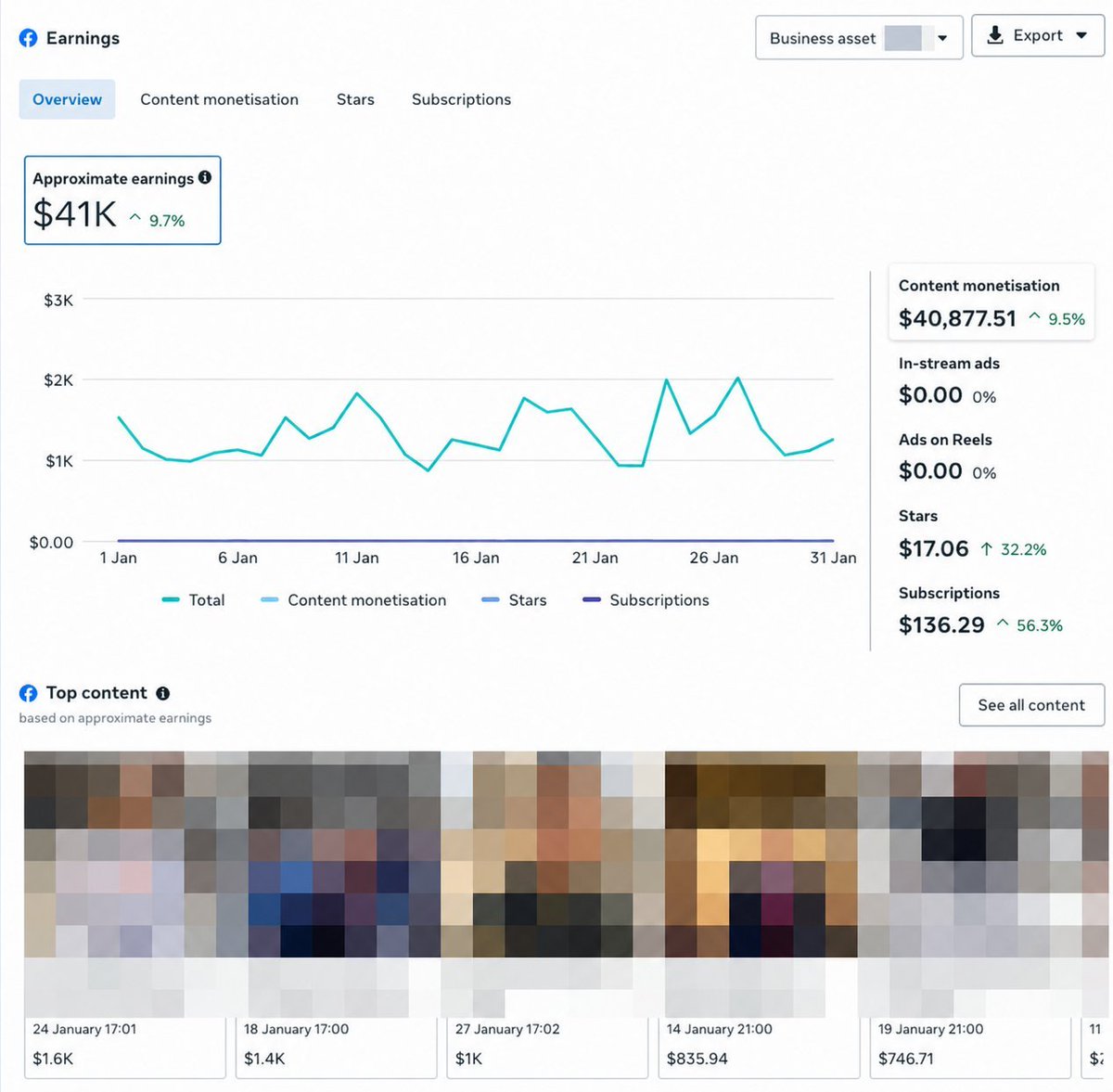
$41,030.86 in a Single Month: What Facebook Page Monetization Looks Like at Full Speed
This weekend we shared a screenshot that stops most publishers mid-scroll: $41,030.86 earned in a single calendar month on one Facebook page that our team runs day to day. That number is not a projection or a best-case scenario. It is a real payout from one page inside a portfolio that now spans 300 million followers under active management.
One page, one month: $41,030.86 in Facebook Content Monetization earnings from a page our team manages.
The figure matters beyond its headline value because it illustrates what the program can produce when every variable is treated as a managed system rather than a side project. Content selection, posting cadence, format mix, and bonus window activation all compound. Miss any one of them consistently and the ceiling drops fast.
The platform behind these numbers is paying at scale. In 2025, Facebook paid content creators nearly $3 billion from its creator monetization programs, a 35% increase from the previous year and its highest annual total ever. The majority, 60 percent of Facebook creator payouts, came from Reels, while the number of creators earning over $10,000 annually on Facebook grew over 30 percent year over year. For publishers who treat Facebook page monetization as a core revenue line rather than a bonus channel, the program is rewarding that commitment with its largest payouts in the platform's history.
Meta paid Facebook creators nearly $3 billion in 2025, a 35% year-over-year increase and the highest annual total in platform history. Source: Meta Newsroom
There are two ways to participate in a program at this level. The first is to build and operate the page yourself, with guidance on strategy, content systems, and compliance. The second is to hand the page to a managed team that runs it daily while ownership stays with you. Both paths are covered in detail at our Facebook turnkey management overview and at our Facebook consulting page for operators who want to stay in the driver's seat.
Three 2.5x Bonus Windows Sitting Unclaimed in the Past Tab
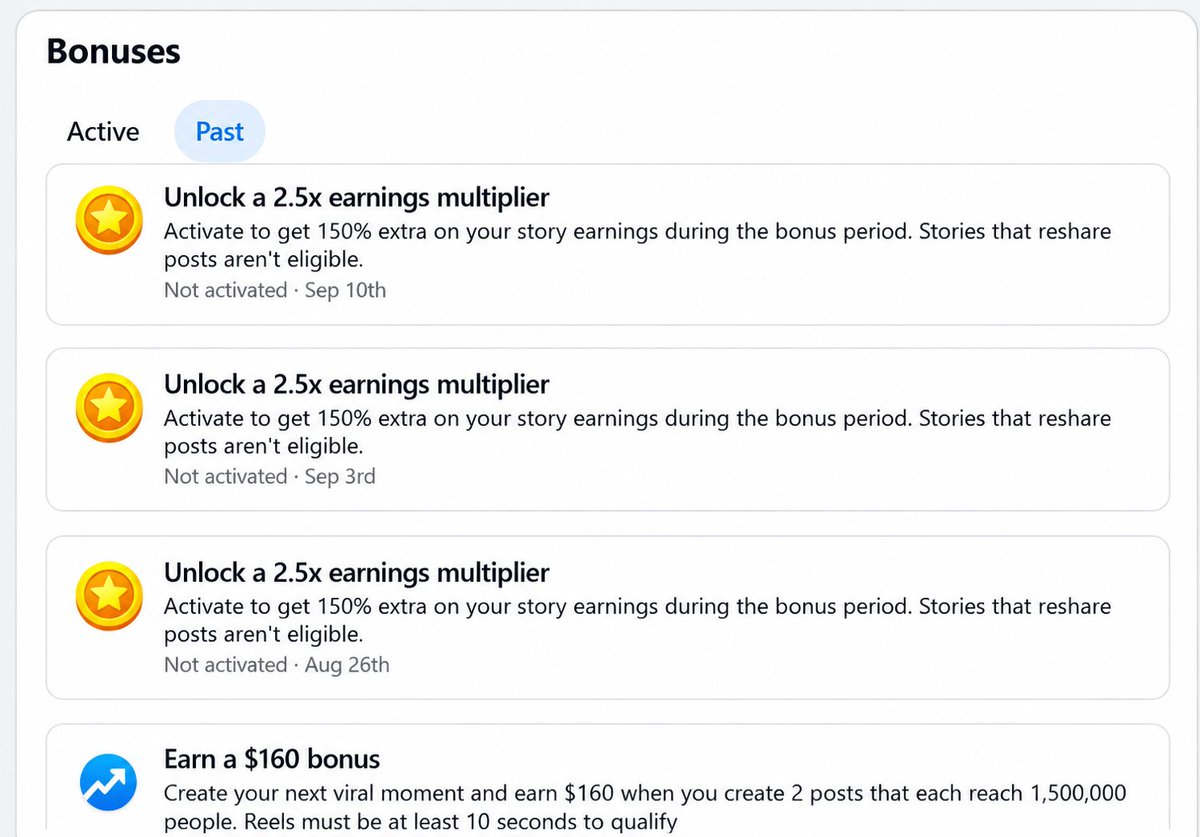
The second Facebook story from this weekend is harder to look at. We shared a screenshot of a publisher's Professional Dashboard showing three separate 2.5x earnings multiplier windows, dated August 26, September 3, and September 10, all sitting in the Past tab. None were activated. That is not a minor miss. A 2.5x multiplier applied across a month of strong content output can represent the difference between a four-figure and a five-figure payout period.
Three separate 2.5x bonus multiplier windows, all expired unclaimed. Each one represented a real earnings opportunity that passed without activation.
The Facebook Content Monetization program structures bonuses so that Facebook pays creators a bonus based on content performance metrics including reach, engagement, and views, beyond ad revenue, and this component rewards content that performs exceptionally well regardless of ad density. The multiplier windows are time-gated. They appear, run for a defined period, and expire. Publishers who are not checking their Professional Dashboard on a weekly cadence will miss them. This is not an edge case. It is the default experience for anyone treating page management as an occasional task rather than an operating function.
The Facebook Content Monetization program is a unified system designed to simplify how performance-based revenue is earned, combining payouts from multiple sources including ads and bonuses into a single performance-based model, with earnings tied directly to engagement and content performance. That unification means multiplier windows now affect the full earnings stack, not one isolated bonus line.
Inauthentic Engagement Flag Reversed: What the Recovery Looks Like
One of the highest-engagement posts from this window was not about revenue. It was about risk. A publisher in our community was flagged for inauthentic engagement two days prior. Earnings paused. Page recommendations were killed. Then Facebook reviewed the case and reversed all of it.
The reversal notification after Facebook reviewed and cleared the inauthentic engagement flag. Earnings and recommendations were fully restored.
This outcome is genuinely rare. The inauthentic engagement flag is a Meta enforcement action that switches off a page's monetization over suspected artificial activity, fires automatically with no human review, and the notice never names a specific post, while in 84 percent of cases recommendations are pulled alongside monetization so reach sinks as well. Getting a full reversal within days, with monetization and recommendations both restored, is the exception rather than the rule. It happens, but publishers should plan around the possibility that a flag may not clear quickly.
Meta has confirmed that appeals are reviewed and enforcement decisions can be reversed, and the company has explicitly acknowledged that automated systems are not perfect and that creators who believe a decision was incorrect have recourse. The appeals path runs through the Professional Dashboard under Support Home. The outcome in this case, a full reversal in under 72 hours, shows that documented compliance records and clean content history give the appeal its best possible footing. Meta says it is continuously working to improve enforcement accuracy, acknowledging that automated systems are not infallible.
Google Keeps Its Ad Empire: What the Ruling Means for Open-Web Publishers
The biggest structural story in digital advertising this week had nothing to do with Facebook. Alphabet's Google escaped a breakup of its advertising technology business when a judge in Virginia rejected U.S. antitrust enforcers' bid to force a sale of Google's online advertising exchange. U.S. Judge Leonie Brinkema in Alexandria, Virginia, declined to make Google sell AdX, where publishers pay Google a 20% fee to sell ads in auctions that happen instantly when users load websites.
The ruling has enormous implications for the $1 trillion global advertising economy. According to the court, Google has illegal monopolies in two areas of the online advertising market: ad exchanges, where publishers sell ad space through supply-side platforms, and ad servers, used by publishers to manage ad inventory. Publishers have been locked into Google's ecosystem because of the connection between these properties.
Judge Brinkema opted for behavioral remedies, meaning rules Google must follow without changing who owns what, and the exact required changes were not disclosed in the public order. For open-web publishers who depend on programmatic display revenue, this means the existing power structure of the ad auction remains in place. Google will operate under court-ordered behavioral constraints, but AdX and DoubleClick for Publishers stay inside the same corporate entity. Google will almost appeal the ruling, which could take months or years and prevent meaningful changes to Ad Manager or digital advertising generally.
The practical read for Facebook page publishers is that Google's grip on programmatic display inventory reinforces why platform-native monetization through Meta's Content Monetization program is worth building as a primary revenue channel rather than a supplement to AdSense-style display income.
Amazon Is Now Buying Ads Inside ChatGPT Answers: The Publisher Implication
The AI advertising story moved from theoretical to operational this week. Amazon is partnering with OpenAI to let select U.S. brands run ads in ChatGPT. Amazon advertisers will be able to extend their campaigns into conversational experiences on ChatGPT, with Delta Vacations among a select group of U.S. brands piloting the integration.
In less than 200 days after launch, ChatGPT Ads reached $1 billion in annualized revenue run rate, and the platform is now used by tens of thousands of advertisers and continues to expand globally. Amazon operates the third-largest digital advertising platform and neared $70 billion in ads revenue last year, which means its entry into ChatGPT's ad ecosystem is not a test. It is a structural commitment from one of the three largest ad buyers in the world.
Market intelligence firm Sensor Tower tracked a 163% increase in ads served per user per hour of time spent on ChatGPT in the U.S. in August, compared to April. The rate of ad density growth inside the platform is moving fast. OpenAI has said ads are served below the end of a ChatGPT response and are clearly labeled as sponsored.
For publishers who have built traffic dependent on traditional search referrals, the emergence of a paid ad layer inside the AI answer layer is a signal worth taking seriously. Amazon's Director of Omnichannel Supply at Amazon DSP described conversational ads as the fastest growing engagement opportunity for brands to reach new and existing audiences. Advertising budgets tend to follow attention. If AI chat interfaces continue to absorb the question-and-answer use cases that previously drove search traffic, the revenue tied to that traffic will migrate as well. Building revenue sources that are not dependent on search referral, including Facebook page monetization income, matters more in this environment than it did 24 months ago.
Frequently Asked Questions
What is the Facebook Content Monetization bonus multiplier and how do I activate it? Meta periodically offers earnings multiplier windows inside the Facebook Content Monetization program. These appear in the Bonuses section of your Professional Dashboard. They are time-limited. To activate one, you must open the dashboard before the window expires and opt in. Unclaimed windows move to the Past tab and cannot be retroactively activated. Checking the dashboard at least once per week is the minimum cadence needed to catch every window.
What happens when Facebook flags a page for inauthentic engagement? Meta's automated system can flag a page and pause earnings and recommendations without prior notice or a named specific post. The page continues to publish but stops earning. Publishers can submit an appeal through the Support Home section of their Professional Dashboard. Meta has confirmed that enforcement decisions can be reversed following review. Maintaining a clean content history and detailed records of your posting practices strengthens any appeal.
How does the Google ad tech ruling affect Facebook page publishers? A Virginia federal judge ruled that Google will not be forced to sell its AdX advertising exchange or DoubleClick for Publishers, though Google must comply with behavioral remedies to be specified by the court. For publishers who rely on programmatic display advertising through Google's stack, the existing structure remains in place through at least a lengthy appeals process. Publishers who have diversified into Facebook Content Monetization have less exposure to the outcome of this case.
What does Amazon buying ads in ChatGPT mean for content publishers? Amazon's entry into ChatGPT advertising confirms that major ad buyers view conversational AI as a legitimate and growing inventory channel. If consumer attention continues shifting from search to AI chat for product research and discovery, the referral traffic that currently funds display advertising on publisher sites will shrink. Building revenue channels tied to platform-native monetization, including Facebook page income, reduces dependence on search-driven display revenue.
What is the difference between Facebook page consulting and fully managed page services? Consulting means a publisher retains full operational control of the page and receives strategy, content guidance, compliance support, and monetization optimization from an external team. Fully managed service means the external team handles all day-to-day operations including sourcing, posting, bonus activation, and audience management while legal ownership of the page remains with the publisher. Both approaches aim for the same outcome but suit different operators depending on how much time and attention they want to invest directly. Details on each path are at our consulting overview and our turnkey management page.
See more from Publisher in a Box in your Google results
The team behind 300M+ managed followers. We help publishers scale traffic, revenue, and audience across Facebook, Google Discover, and syndication networks.