Search across our learning center -- articles, newsletters, and more. Start typing or click a topic above.
Stay in the Loop
Get exclusive publishing strategies, industry insights, and early access to new features. No spam -- just signal.
Join 2,000+ publishers. Unsubscribe anytime.
Industry News
Facebook Content Monetization Milestones, Meta Ad Revenue Records, and the Google Search Revolt
Publisher In a Box10 min read
Table of Contents
This article is part of our daily digest series, in-depth summaries drawn from our X account, @publisherinabox, expanded with industry data. (weekend recap)
Facebook Content Monetization Is Producing Real Publisher Income
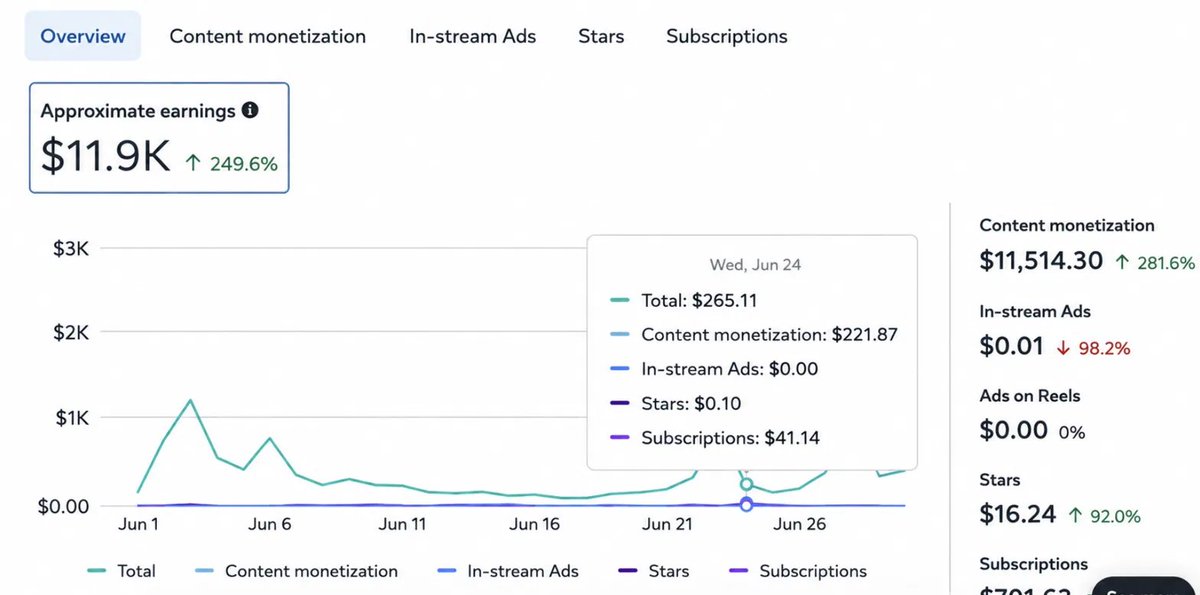
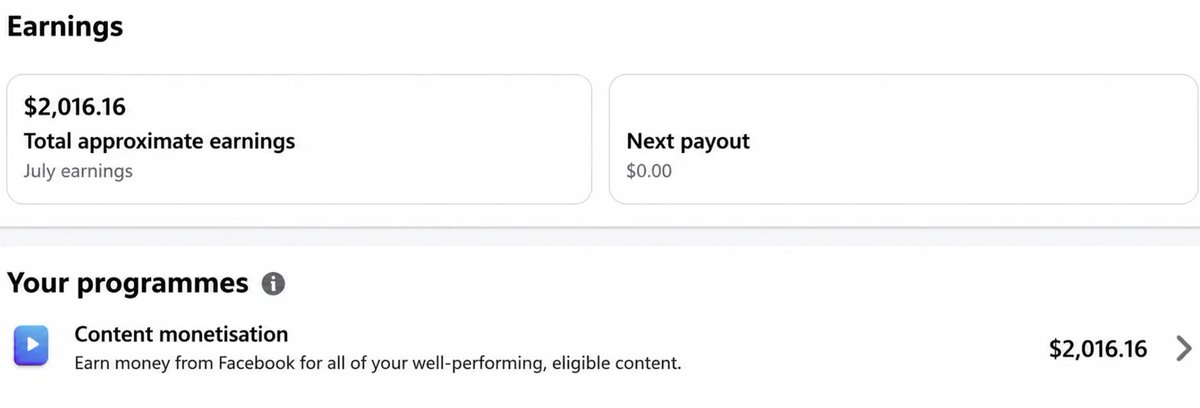
The numbers that landed in our feed over the past 72 hours are worth pausing on. One page generated $11,514.30 in a single month through Facebook's Content Monetization program, representing a 281% increase from prior periods. A separate, smaller page that had only recently qualified posted $2,016.16 for July alone. And a single post with 8.2 million qualified views paid out $1,621.87 directly through the same program.
These are not anomalies. They reflect a structural shift in how Meta pays creators and publishers. Meta's official announcement confirmed that the number of creators earning more than $10,000 annually on Facebook has grown by over 30% year-over-year. MediaPost reported that 2025 marked an all-time high for creator payouts on Facebook, with nearly $3 billion paid out from creator monetization programs, a 35% increase from 2024.
$11,514.30 in one month from a single Facebook page through Content Monetization, up 281%.
The architecture behind these payouts matters. Meta's own documentation confirms that the Facebook Content Monetization program pays creators for every eligible format, short- and long-form videos, Reels, Stories, and photo and text posts, under a single unified payout framework. The era of managing five separate monetization programs is over. Everything flows through one performance-based dashboard, which makes the page-as-asset model far more predictable to operate.
What is the distinction between running a page and building a media asset? The pages producing these numbers share consistent traits: professional branding, a reliable posting cadence, and content that earns qualified views rather than casual impressions. That approach to Facebook page management is what separates one-time viral moments from repeatable monthly income. The Facebook Content Monetization program rewards sustained performance, not lucky spikes.
$2,016.16 in July from a page that had only recently qualified for Content Monetization.
Image-Only Pages Can Generate Millions of Views, Without a Single Reel
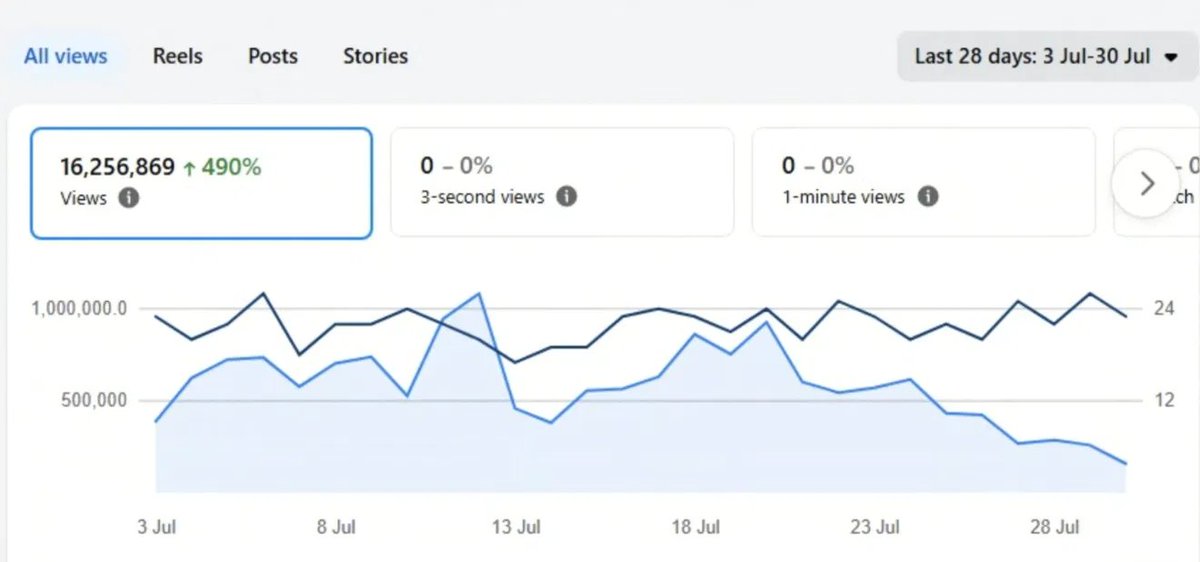
One of the most discussed data points from the weekend was a page with fewer than 10,000 followers that accumulated 16.2 million views in 28 days, representing a 490% increase, with zero Reels. Every view came from image content alone.
This challenges a common assumption: that Facebook content monetization requires heavy video production. The data says otherwise. Echobox's analysis of publishers enrolled in Facebook's Content Monetization program found that image-link posts produced the highest average earnings per share at $1.93, edging out video at $1.72. The platform's algorithm is rewarding content that earns genuine attention, regardless of format.
16.2 million views in 28 days. Zero Reels. Fewer than 10,000 followers. Image content only.
For publishers who have been told they need to produce constant video to succeed on Facebook, this is an important correction. Strong curation, consistent publishing rhythm, and audience-appropriate content choices matter more than format. That is the foundation of any serious Facebook consulting engagement worth taking on.
Image-link posts outperform video for per-post monetization earnings on Facebook.
Meta Reported 27% Ad Revenue Growth, and That Is a Publisher Story
The Q2 2026 earnings report that Meta published on July 29 deserves attention beyond the stock-price reaction. Meta's official earnings release showed advertising revenue of $59.36 billion, up 27% year-over-year, driven by a 14% increase in ad impressions delivered and a 12% rise in average price per ad. Total revenue reached $60.8 billion, up 28%.
For publishers monetizing through Facebook, this is the tailwind that matters. When Meta's advertising revenue grows at 27%, the pool of money flowing through the platform's content monetization programs grows with it. Yahoo Finance's earnings highlights noted that AI improvements drove an 8.3% increase in ad clicks and a 15.7% uplift in conversions on Facebook, numbers that translate directly into higher CPMs for the creators and publishers earning through Content Monetization.
Investing.com's analysis of Meta's earnings slides showed that Average Revenue per Person reached $16.86 in Q2 2026, up from $13.65 in Q2 2025, a 23% increase in how much Meta extracts per user. That improvement in monetization efficiency is what makes the per-view payout rates publishers are seeing possible. Meta also guided Q3 2026 revenue to a range of $61 billion to $64 billion, signaling continued growth through the rest of the year.
Meta's performance contrasted sharply with the broader ad market. Its 27% growth outpaced Amazon, Google, and Microsoft across the same period. That is not a coincidence. It reflects a structural advantage that Facebook's AI-driven ad targeting has built over competing platforms, and it is the same system that determines what publishers earn per qualified view.
Meta Is Now Putting Real Humans on the Phone With Publishers
A new feature appeared directly inside the Professional Dashboard for some Facebook publishers this week: a prompt labeled "You've unlocked a 1:1 call with Meta." The offer provides a scheduled call with a Meta media expert along with personalized monetization tips, at no cost.
The "You've unlocked a 1:1 call with Meta" prompt appearing in the Professional Dashboard for eligible publishers.
This is a meaningful signal. Historically, Facebook's creator and publisher support has been self-serve and documentation-based. The introduction of direct human touchpoints from Meta's media team suggests the platform is treating monetized publishers as accounts worth retaining and developing, not onboarding and leaving to operate alone. Publishers who receive this prompt should treat it as a genuine resource for optimizing their content strategy and payout rates.
LinkedIn's AI Slop Crisis Is a Warning About Platform Dependency
LinkedIn rolled out a "Seems like AI slop" reporting button on July 30, 2026, giving users the ability to flag content they believe was generated by AI. TechCrunch reported that the move reflects a broader shift across online publishing platforms to cut back on AI content as audiences grow frustrated with inauthentic posts.
HNGN's coverage cited data from AI detection firm Pangram showing over 40% of long-form LinkedIn posts are fully AI-generated, with LinkedIn hosting roughly 62% of all AI content scanned across major social networks. LinkedIn Chief Product Officer Hari Srinivasan confirmed that flagged posts will see reduced algorithmic reach, and the platform is replacing its own AI writing feature with a more conservative proofreading tool.
The lesson for Facebook publishers is direct. Authenticity and consistent editorial voice are not soft branding considerations. They are platform-survival requirements. Forbes noted that LinkedIn's CPO called AI slop a "top priority," and feedback from user reports will directly train the platform's detection models. The same trajectory is plausible on any social platform experiencing the same content quality erosion.
For anyone asking whether AI-assisted Facebook pages can remain monetized in 2026, the LinkedIn situation underscores that the question is not hypothetical. Human QA, editorial consistency, and genuine audience signals are the factors that separate pages that maintain monetization from those that do not.
Major Publishers Are Reconsidering Google, and Facebook Is the Beneficiary
The Wall Street Journal broke a story this week that major publishers, including USA Today, Politico, Reuters, The Economist, and People, are actively discussing blocking Google's web crawler entirely. TechSpot's reporting on the WSJ story confirmed that Reddit, USA Today, Reuters, Politico, The Economist, and People Inc. are among the companies reconsidering how much access they give Google as referral traffic collapses.
The Semrush data behind the story is striking. AndroidHeadlines reported that organic search traffic from U.S. Google users fell significantly across major domains between mid-2025 and mid-2026, with USA Today dropping between 18% and nearly 50% in specific segments, Politico down 20% to 23%, and Business Insider experiencing a decline of more than 85%. USA Today CEO Mike Reed stated it is "time to take a stand."
The mechanics of the problem are straightforward. Tweaktown's analysis explained that Google's AI Overviews answer search queries directly on the results page, removing the need to click through to the source. Publishers supply the content that trains the AI and fuels the Overviews, but they no longer receive the traffic that once made that contribution worthwhile.
For Facebook publishers, this shift in the open-web ecosystem creates a structural advantage. Audience relationships built on Facebook are not intermediated by a search algorithm that can quietly redirect attention elsewhere. The content-to-payout pipeline through Facebook Content Monetization depends on the platform's own recommendation engine, which, as the Q2 earnings numbers confirm, is getting more efficient, not less. Publishers who understand how to build and manage that relationship have options that search-dependent media companies are now discovering they do not.
Frequently Asked Questions
What is Facebook Content Monetization and how does it pay out? Facebook Content Monetization is Meta's unified program for paying creators and publishers based on the performance of their content across all eligible formats, including Reels, long-form video, Stories, photos, and text posts. Payouts are calculated using a performance-based model that weighs qualified views, engagement depth, and audience retention rather than a fixed ad revenue share.
Do you need to publish video to earn from Facebook page monetization? No. Analysis of nearly 700 pages enrolled in the program has found that image-link posts generate among the highest average earnings per share. Pages running image-only content have demonstrated millions of qualified views and substantial monthly payouts without producing a single Reel.
How does Meta's overall ad revenue growth affect what publishers earn per view? Meta's ad revenue growth directly influences the size of the monetization pool available to publishers. When ad impressions grow and average price per ad rises, as both did in Q2 2026, the effective earnings rate per qualified view tends to increase alongside overall platform revenue.
What does the Google search traffic decline mean for Facebook publishers? Publishers whose audiences live inside Facebook's ecosystem are insulated from the Google AI Overview problem. The payout a Facebook page earns is driven by Facebook's own recommendation and distribution system, not by external search referrals. This makes the Facebook page model more durable during periods when search traffic to open-web publishers is collapsing.
What separates a Facebook page from a media asset in terms of monetization potential? A media asset is a page built with consistent branding, a reliable publishing cadence, and content choices optimized for qualified views rather than casual impressions. It generates repeatable monthly income through Content Monetization rather than depending on viral moments. Publishers who want to operate at that level can explore what that approach looks like through Facebook consulting or ongoing Facebook page management.
See more from Publisher in a Box in your Google results
The team behind 300M+ managed followers. We help publishers scale traffic, revenue, and audience across Facebook, Google Discover, and syndication networks.