Search across our learning center -- articles, newsletters, and more. Start typing or click a topic above.
Stay in the Loop
Get exclusive publishing strategies, industry insights, and early access to new features. No spam -- just signal.
Join 2,000+ publishers. Unsubscribe anytime.
Industry News
Facebook Content Monetization Recovery, Meta One Growth Tools, and the AI Licensing Gap for Publishers
Publisher In a Box11 min read
Table of Contents
This article is part of our daily digest series, in-depth summaries drawn from our X account, @publisherinabox, expanded with industry data.
Violation cleared, revenue record set: what two pages tell us about Facebook content monetization
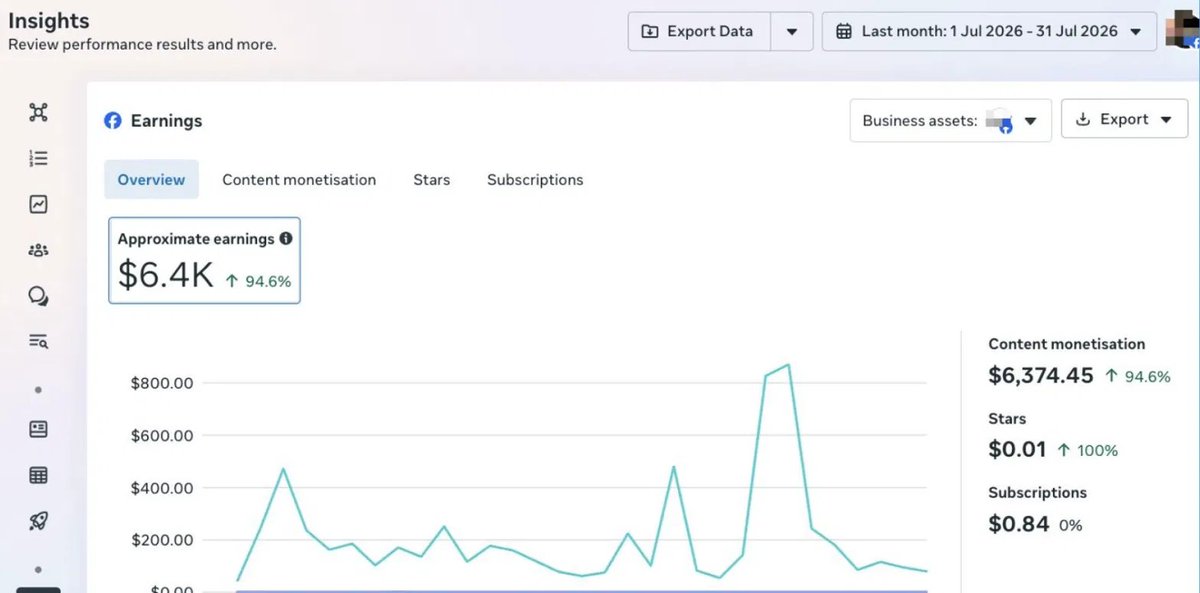
Two publisher results shared on our X account in the last 24 hours tell a story that goes beyond the numbers themselves. One page earned $6,374.45 in a single month, a 94.6% gain, on a page that had been sitting flagged not long before. The violation was appealed, monetization came back online, and instead of returning to its prior baseline the page printed its best month on record. A second page posted $21,946.57 in Facebook content monetization earnings for July, a 42.3% month-over-month climb, on a page that had faced false violations weeks earlier. The publisher kept publishing through the appeal, held as much reach as the situation allowed, and once Meta cleared the flags, distribution came back and earnings followed.
$6,374.45 in one month, up 94.6%, from a page that had been flagged for a violation weeks earlier.
These are not anomalies. The pattern repeats across the pages we work with: a flag, an appeal, a cleared account, and then a month that outperforms what came before. The reason is structural. Facebook consulting focused on compliance and appeal strategy matters not because it gets a page back to where it was, but because pages that survive the appeal window with their audience intact often come out ahead. Reach that was partially suppressed during the flag period returns, the algorithm re-evaluates engagement signals, and performance compounds.
The platform context here is favorable. Meta's Q2 2026 earnings release reported that ad impressions across its family of apps grew 14% year-over-year, with the average price per ad rising 12%. MediaPost noted that Meta's Advantage+ AI-powered ad suite reached a $75 billion annual revenue run rate in Q2. A rising ad price environment is direct fuel for the in-stream and performance bonus components of Facebook content monetization. More ad spend on the platform means more revenue available to distribute to eligible pages.
Meta One adds follower-growth tools for Facebook Professional Profiles, including a bold follow button on Reels and automated follow invitations.Two pages, both cleared of violations, both posting their best months on record.
The mechanics of Facebook content monetization make this recovery curve predictable. Multilogin's 2026 breakdown of the program notes that the payout model is built around qualified views, watch time, and engagement depth. A page that maintained publishing consistency during a flag period, even at reduced distribution, retains its audience relationship. When distribution normalizes, those engagement signals are already in place and the algorithm does not need to re-learn the page from scratch. The pages we track are living evidence of this dynamic.
For publishers who have not yet mapped their compliance posture, our Facebook turnkey management overview explains the ongoing monitoring that keeps pages in good standing and the appeal process when flags do appear.
Meta One rolls out follower-growth tools built for Facebook Professional Profiles
The second major story in the last 24 hours is Meta's expansion of incentives for Meta One subscribers. The new features are aimed at pages and creators using Facebook Professional Profiles, and two of them are worth watching closely.
First, Social Media Today reported that Meta is rolling out a larger, more prominent follow button on Reels for Meta One subscribers with Facebook Professional Profiles. The intent is to convert Reels viewers into followers at a higher rate than the standard interface allows. For any page whose monetization eligibility depends on follower count thresholds, this is a direct growth mechanism built into the content experience rather than bolted on as a separate campaign.
Second, and arguably more consequential for pages with active posting schedules, BetaNews described a new "Grow followers automatically" feature: Meta can automatically send follow invitations to users who engage with a subscriber's content, converting commenters and reactors into followers without any manual action. Social Media Today also confirmed that the update bundle includes expanded access to AI-powered response tools within Messenger, enhanced profiles for displaying off-platform sites, and the option to add up to three location listings.
MediaPost placed these updates in the context of Meta's broader push to build its subscription business, noting that Meta One subscriptions are now cited alongside Meta Business Agents as new revenue streams beyond advertising in the company's Q2 2026 earnings narrative. The subscription tier is early-stage by Meta's own admission, but the tooling it delivers to creators is already material. Global Dating Insights noted that Meta has not publicly disclosed detailed Meta One adoption figures, and that the company's subscription business remains small relative to its advertising operations, but the direction of investment is clear.
For publishers managing Facebook page monetization at scale, the automated follow invitation feature deserves a test. Meta's Q2 earnings showed that daily active people across its family of apps reached 3.60 billion, up 3% year-over-year. The platform is still growing its active base. A tool that systematically converts content engagement into follows on a page with 3.6 billion potential audience members in the ecosystem is not a trivial edge.
How publishers make money from AI in 2026: the licensing tier that most pages cannot reach
Our third post of the day addressed one of the most-discussed topics in the publishing industry right now: AI content licensing. The honest summary is that licensing is real, growing, and structurally inaccessible to the majority of publishers.
The numbers at the top of the market are striking. Digiday reported that AI licensing deals with Meta, signed in December 2025, began producing "meaningful" revenue for some publishers for the first time in Q1 2026. USA Today Co. reported "notable" AI licensing revenue in that quarter. People Inc. cited AI licensing as a driver of its non-session-based revenue, which grew 24% year-over-year to $102.7 million in Q1 2026. Decoding Growth reported that USA Today Co.'s revenue category covering AI partnerships and licensing grew 126% year-over-year to $33.75 million in Q1 2026.
At the institutional end of the market, the figures are larger still. PR News tracked that News Corp's deal with Meta, signed in March 2026, is worth up to $50 million per year over three years, covering WSJ and News Corp brands for Meta's AI products. CASRAI reported that Wiley disclosed $49 million in FY2026 AI licensing revenue, with lifetime AI revenue surpassing $110 million.
The structural reality, though, is that these deals flow almost entirely to publishers with scaled, well-cleared archives and genuine bargaining power. NotioncCue's 2026 analysis concluded that "the entire licensing market pays only the brand-name corpus with genuine negotiating leverage, and every serious 2026 industry analysis finds the long tail of small and mid-size publishers will see no meaningful revenue from this." For most Facebook page publishers, AI licensing is not a path. The path that works is the one already described above: qualified content, consistent publishing, clean compliance, and monetization programs that pay based on performance rather than archive size.
Digiday also noted that AI licensing revenue is difficult to forecast because it "blends fixed licensing fees with volatile usage-based payments tied to external AI platform demand." That volatility is a reason why Facebook content monetization, with its performance-based and relatively predictable payout structure, remains the more actionable revenue source for the publishers we work with. Our Facebook consulting practice focuses on exactly this: building the page health and content infrastructure that qualifies for and sustains program participation.
The three signals worth watching this week
Pulling the threads together, three things warrant attention from any publisher operating a monetized Facebook page right now.
Violation appeals are not defensive moves. The two page results from today show that a successful appeal, combined with consistent publishing behavior during the flag period, can produce a month that outperforms the pre-flag baseline. The appeal process is worth treating as an active revenue strategy, not a compliance obligation.
Meta One's automated follower tools are live. The bold follow button on Reels and the automated engagement-to-follow invitation feature are available now for Meta One subscribers with Facebook Professional Profiles. Pages that are close to follower thresholds for monetization eligibility should evaluate whether the subscription cost is justified by the acceleration these tools can deliver.
AI licensing is a headline story, not a roadmap for most publishers. The deals are real and growing. They are also concentrated at the top of the publishing market. For the overwhelming majority of Facebook page publishers, the relevant AI story is not licensing but the way Meta is using AI to improve ad targeting and content recommendations internally, which is already showing up in the 12% average price per ad increase and 14% impression growth that Meta reported for Q2 2026. That is the mechanism by which AI is benefiting publishers on Facebook today.
Frequently asked questions
Can a Facebook page recover its monetization earnings after a violation is cleared? Yes, and in many cases pages earn more in the month following a cleared appeal than they did before the flag. This happens because the page retains its audience through the appeal period, and once distribution normalizes the engagement signals are already in place. Consistent publishing during the appeal window appears to accelerate the recovery.
What are the new Meta One follower-growth tools for Facebook Professional Profiles? Meta One subscribers with Facebook Professional Profiles now have access to a larger, bolder follow button displayed on Reels and an automated feature that sends follow invitations to users who engage with their content. Both tools are designed to convert content engagement into follower growth without manual effort from the page owner.
Why are AI content licensing deals not accessible to most Facebook page publishers? AI licensing deals are negotiated based on archive scale, brand recognition, and the legal clarity of a publisher's content rights. The market is structured to pay large, established publishers with substantial back catalogues. Small and mid-size publishers typically lack the bargaining power to secure meaningful deals, and industry analysis in 2026 consistently finds that the long tail of publishers will see no material revenue from this channel.
How does Meta's ad revenue growth affect Facebook content monetization payouts? Facebook content monetization payouts are tied to ad revenue generated from a page's content. When Meta's overall ad market grows, including through higher ad prices and more impressions, the pool available for distribution to eligible creators grows with it. Meta's Q2 2026 results showed ad impressions up 14% year-over-year and average price per ad up 12%, both of which are positive signals for content monetization earnings.
What should a publisher do if their Facebook page is flagged for a violation? File the appeal promptly through Meta's professional dashboard, document all content carefully, and continue publishing within policy guidelines during the review period. Maintaining audience engagement while the appeal is in process preserves the reach signals that drive monetization performance once the flag is cleared. Working with specialists in Facebook turnkey management can reduce the time to resolution and the revenue impact of the flag period.
See more from Publisher in a Box in your Google results
The team behind 300M+ managed followers. We help publishers scale traffic, revenue, and audience across Facebook, Google Discover, and syndication networks.