Search across our learning center -- articles, newsletters, and more. Start typing or click a topic above.
Stay in the Loop
Get exclusive publishing strategies, industry insights, and early access to new features. No spam -- just signal.
Join 2,000+ publishers. Unsubscribe anytime.
Industry News
Facebook Content Monetization, WhatsApp Usernames, and Meta's Prediction Markets Push: What Publishers Need to Know
Publisher In a Box11 min read
Table of Contents
This article is part of our daily digest series, in-depth summaries drawn from our X account, @publisherinabox, expanded with industry data. (weekend recap)
Meta's Creator Payout Record: Six Years of Straight Growth
The single most important number for anyone running a Facebook page right now is $3 billion. Meta's official announcement confirmed that Facebook paid content creators nearly $3 billion from its creator monetization programs in 2025, a 35% increase from the prior year and its highest annual total ever. This was not a plateau or a recovery. It was the sixth consecutive year of growth, climbing from $800 million in 2020 through $1.1B, $1.4B, $1.7B, $2.0B, and now $3.0B.
Meta creator payouts climbed from $800M in 2020 to $3B in 2025, six straight years of growth with a 50% jump in the final year alone.
The 2024-to-2025 jump alone represents a 50% increase, which is the sharpest single-year acceleration in the run. CNBC reported that about 60% of that total went to Reels content, with the rest split across Stories, photos, and text posts. That distribution matters for page operators: Facebook is not a video-only payout machine. Meta also confirmed that the number of creators earning more than $10,000 annually on Facebook grew by over 30% year-on-year.
The data dismantles the recurring argument that Facebook is a dying platform for creators. Anyone telling you to abandon Facebook page monetization is citing a narrative, not the numbers. Pages that combine consistent original content with a clear distribution strategy are sitting inside the fastest-growing creator payout environment Facebook has ever operated. If you want a structural assessment of where your page stands, our team at Publisher in a Box's consulting practice works through exactly this kind of audit.
Meta's creator payout trajectory: six years of uninterrupted growth culminating in a record $3 billion in 2025.
The Facebook Influencer Opportunity: Two-Part Series Breakdown
This weekend we published both parts of our Facebook Influencer Strategy series. Part 1 anchors the opportunity with a concrete benchmark: one creator earning $27,000 per month from Facebook alone, with no famous name and no production team. That figure is not an outlier designed to sell a dream. It represents a category of operators who treat their Facebook pages as media businesses, not social profiles.
Part 2 goes deeper into the mechanics of that strategy, covering how the algorithm distributes content to new audiences, how engagement signals interact with reach, and why most influencer content stalls at the wrong metric. The core insight across both pieces is the same one we highlighted in a standalone post this weekend: views without engagement tells the algorithm your content was shown but nobody cared enough to stop. Engagement without views tells you your existing audience loves you but Facebook is not distributing you to new people. Pages stall because operators optimize for one signal and ignore the other.
For publishers who want a managed approach to growing a Facebook page rather than running the system themselves, our turnkey Facebook page management service covers both distribution mechanics and content strategy in a done-for-you format.
WhatsApp Usernames: What the Cross-Platform Identity Move Means for Publishers
The most structurally significant Meta product news of the weekend arrived from WhatsApp. Meta's official announcement confirmed that WhatsApp has opened username reservations for its more than three billion users, with the full feature set to launch later this year. The reservation window is open now through Settings > Account > Username in the latest version of the app.
WhatsApp opened username reservations for 3 billion users in late June 2026, with full rollout planned for later this year.
The detail that matters most for Facebook page operators is this: TechCrunch confirmed that businesses and creators can claim their existing Facebook or Instagram username as their WhatsApp username. Meta is building a unified identity layer across its family of apps. Your page handle on Facebook is becoming your brand identity across Facebook, Instagram, and WhatsApp simultaneously.
Why does that matter at a practical level? WhatsApp has 3 billion monthly active users. When usernames fully launch, a Facebook page with an established brand name and a matching WhatsApp handle will have a consistent, searchable identity across the entire Meta ecosystem. Publishers who claim their handle now, before the public launch, secure that consistency before namespace conflicts emerge. TechTimes noted that Meta opened reservations months ahead of the fuller rollout precisely because, with a user base in the billions, many of the names people want are likely to overlap.
Meta's Prediction Markets App: The "Arena" Play and What It Signals
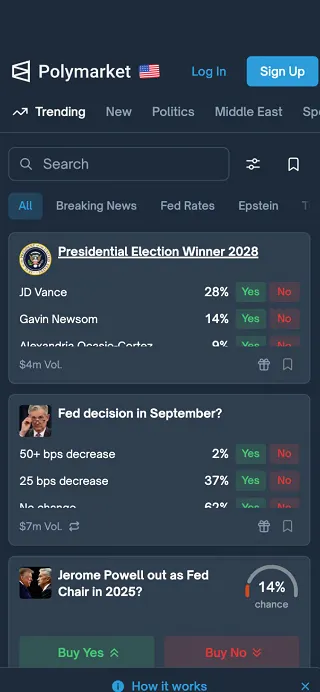
Meta is reportedly building a standalone prediction markets app internally called "Arena." CoinDesk reported that the app would let users forecast outcomes in politics, sports, entertainment, and world affairs, initially through a video game-like points system rather than real-money wagering, though Meta has not ruled out cash betting in the future. The project was first reported by the New York Times, citing people familiar with the matter.
Meta is reportedly developing "Arena," a standalone prediction markets app, as the sector's combined trading volume surpassed $130 billion in 2026.
The scale of the market Meta is entering is not trivial. Yahoo Finance cited analysts at Bernstein projecting that prediction markets could reach $1 trillion in annual trading volume by 2030. Kalshi and Polymarket alone generated a combined $50 billion in trading volume during 2025, and that figure already surpassed $130 billion in 2026. The sector's explosive growth caught the attention of Zuckerberg in a way that has direct implications for Facebook page publishers.
Every new product Meta builds inside its ecosystem creates new engagement surfaces that feed its advertising and recommendation engine. A prediction market product that draws tens of millions of users back into Meta's app family raises time-on-platform across the board. Higher time-on-platform means more ad inventory, and more ad inventory means higher CPMs for publishers running Facebook Content Monetization. Arena may never launch publicly, CoinDesk noted that Meta has not ruled out killing the project, but the direction of travel is clear: Meta is investing in new attention mechanisms, and those investments flow back to the publishers already operating on the platform.
Monetization Reinstated: What One Publisher's Win Teaches the Rest of Us
One of the most-viewed posts of the weekend covered a real publisher outcome. Their monetization was limited on June 16, 2026 for "Limited originality of content." Their previous review request had been rejected. Facebook had set a restore date of September 14, 2026, three months out. They did not wait, and they got their monetization back.
A publisher who received a "Limited originality of content" restriction in June 2026 successfully reinstated monetization without waiting for Facebook's auto-restore date.
The "limited originality of content" restriction is one of the most common monetization blocks Facebook applies. Meta's official content policy update from March 2026 clarified that content involving minor edits to another creator's post, re-uploading posts the page had no role in creating, adding borders, inserting captions, or changing playback speed, is classified as unoriginal and deprioritized in recommendations. Interesting Engineering documented that Meta's automated enforcement systems are not infallible, and that Meta itself confirmed creators always have the option to appeal decisions regarding originality.
The lesson is not that appeals always succeed. The lesson is that accepting Facebook's auto-restore date as the only path forward is a choice, not a requirement. Publishers who understand the appeals workflow, document their original content production process, and submit structured responses through the Professional Dashboard have a materially different outcome rate than those who wait. If your page is currently under a monetization restriction, the restore date Facebook provides is a floor, not a ceiling.
Google Discover Traffic Shifts and the Single-Source Risk
Friday brought reports of an unannounced Google update moving traffic numbers across multiple sites. No official confirmation. No advance notice. The pattern is familiar to anyone who has tracked Discover traffic: algorithm adjustments arrive without warning and the publishers most exposed are those whose entire revenue model runs through a single traffic channel.
This is a structural vulnerability that applies to Facebook page publishers in reverse. Many publishers who built on Google Discover traffic found themselves overexposed when the algorithm shifted. The same risk applies to publishers who rely entirely on Facebook distribution without diversifying their audience ownership, email lists, WhatsApp channels, direct traffic. The publishers who navigate platform shifts without catastrophic revenue loss are the ones who treated audience diversification as a business requirement, not an optional upgrade.
The Content Production System Behind the Numbers
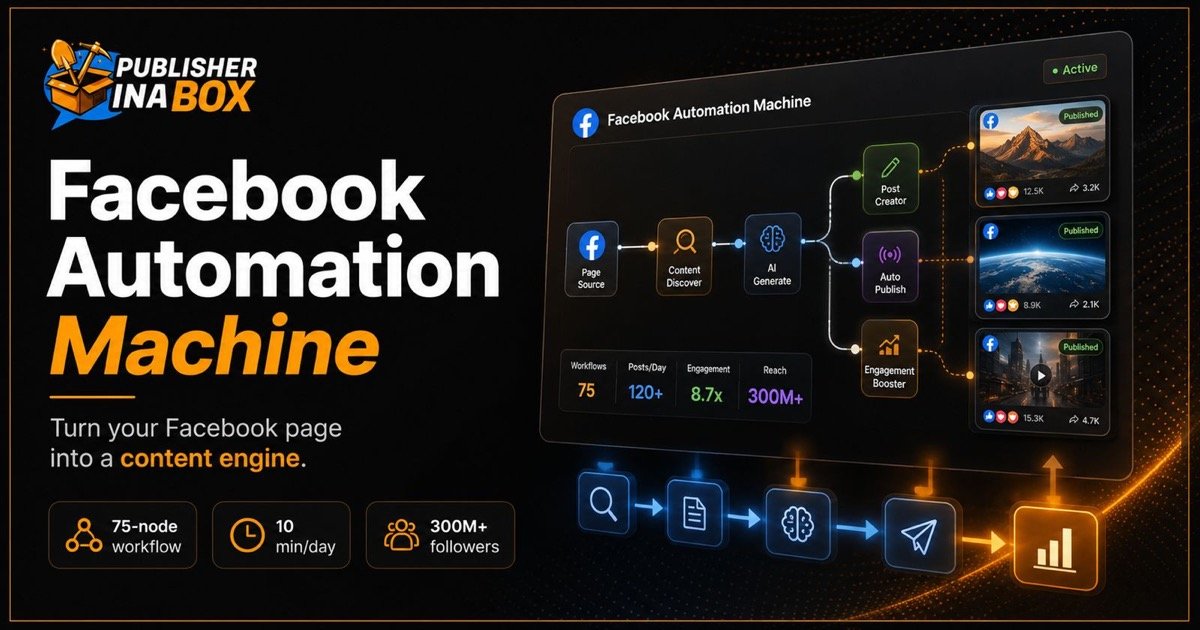
A recurring theme across this weekend's posts is operational efficiency. We outlined a content production system requiring ten minutes per day: no subscription to third-party services, no code, no production team. The system follows a defined loop: identify viral content, source and transform it into original material, schedule and distribute, then analyze which posts generated qualified views versus engagement-only signals.
A ten-minute-per-day content production framework can run consistent original content output without a production team or external subscriptions.
The reason efficiency matters here is that Meta's payout model rewards frequency, originality, and engagement depth simultaneously. Publishers who post original content at high frequency with strong engagement signals are the ones collecting a disproportionate share of that $3 billion annual pool. Running that output manually at scale is not sustainable without a repeatable system. The workflow matters as much as the strategy.
Frequently asked questions
How much did Meta pay creators in 2025? Meta paid content creators nearly $3 billion through its Facebook creator monetization programs in 2025. That figure represents a 35% increase from 2024 and is the highest annual payout total in the platform's history. About 60% of that total was earned through Reels, with the remainder split across Stories, photos, and text posts.
What is the WhatsApp username feature and why does it matter for Facebook page operators? WhatsApp opened username reservations for its 3 billion users in late June 2026, with the full launch planned for later in the year. Creators and businesses can claim their existing Facebook or Instagram username on WhatsApp, creating a unified identity across Meta's entire app family. Publishers who reserve their handle now secure brand consistency before the namespace fills up at public launch.
What is the "limited originality of content" restriction on Facebook and can it be appealed? The "limited originality of content" flag is one of the most common Facebook content monetization restrictions. Meta applies it to content involving minor edits to other creators' posts, including re-uploads, watermarked reposts, added borders, or speed changes. Meta confirmed that creators can always appeal originality decisions through the Professional Dashboard, and the auto-restore date Facebook assigns is not the only resolution path.
What is Meta's Arena app? Arena is the internal name for an experimental standalone prediction markets app that Meta is reportedly developing, as first reported by the New York Times. It would initially use a points-based system rather than real-money wagering. The project is currently in development and may not reach a public launch, but it signals Meta's intent to compete in a sector where Kalshi and Polymarket generated a combined $50 billion in trading volume in 2025.
Why do views and engagement both matter for Facebook page monetization? Views without engagement signals that Facebook distributed your content but audiences did not find it compelling enough to interact with. Engagement without views signals that your existing followers respond positively but the algorithm is not recommending the content to new audiences. Both signals feed into Facebook's qualified views calculation, which is the basis for Content Monetization payouts. Pages that optimize for only one signal tend to plateau.
See more from Publisher in a Box in your Google results
The team behind 300M+ managed followers. We help publishers scale traffic, revenue, and audience across Facebook, Google Discover, and syndication networks.