This article is part of our daily digest series, in-depth summaries drawn from our X account, @publisherinabox, expanded with industry data.
The caption-plus-first-comment structure that stacks clicks
Most page operators write one short caption and move on. That habit leaves the highest-RPM mechanic on Facebook completely unused. The caption-plus-first-comment structure treats a post as a two-layer asset: the caption handles the hook and the emotional pull, while the first comment carries the outbound link, the deeper context, or a follow-up question that forces the reader to interact again.
Every tap, expand, and scroll on a post counts as a signal to the ranking system. More meaningful interaction per post means a wider distribution window, more qualified views, and ultimately a higher revenue per thousand impressions. Echobox analyzed publishers enrolled in Meta's Content Monetization Program and found that image-link posts, where the article URL sits in the first comment rather than the caption body, produced average earnings of $1.93 per share, outperforming every other format tested. Standard link posts came in well below that threshold.
The structure also sidesteps one of Facebook's most documented suppression triggers. PostEverywhere's 2026 algorithm guide notes that 98% of posts US users view contain no external link, because Facebook's ranking system deprioritizes content that pulls people off-platform immediately. Placing the link in the first comment preserves the caption's native-content appearance while still delivering the click path.
Average earnings per post format across publishers enrolled in Meta's Content Monetization Program. *Combined average across carousel, image, and standard link formats. Source: Echobox.
Why the first 60 minutes determine everything
One of our posts from this morning cut straight to a mechanic most operators treat as optional: stop liking comments on new posts and instead reply with a full sentence that ends in a question, forcing the commenter to answer back. Creating that rapid back-and-forth in the first hour is a distribution signal, not a courtesy.
The data supports the urgency. PostEverywhere's algorithm breakdown confirms that Facebook tests every post with a slice of your follower base in the opening hour, and weak early engagement means the post never reaches the other 50% of the feed that surfaces recommended content to non-followers. Social Media Examiner reported that views and time spent watching Reels on Facebook approximately doubled in the second half of 2025 compared to the same period the prior year, driven largely by better content-to-audience matching signals.
The type of engagement matters as much as the volume. Socialinsider's 2026 Facebook benchmarks show that status posts generate higher engagement rates than most other formats precisely because they invite immediate interaction, and that comments remain the clearest signal of meaningful engagement in the platform's ranking system. Replies with questions extend that comment thread depth, multiplying the signal strength of a single post.
Creators who actively engage with their comment sections report 40 to 60 percent higher retention rates than those who publish and disappear, according to aggregated third-party creator data. That retention compounds directly into monetization qualification speed and RPM quality, since Meta's Content Monetization Program heavily weights active engagement, including shares and replies to comments, over passive signals like reactions.
Training a viral content feed from scratch
Curation is widely described as the top lever in publisher content strategy, yet almost no operator has a repeatable system behind it. The process starts with the tool every operator already has: their own Facebook feed. You train it deliberately.
The mechanism is straightforward. You interact consistently with the highest-performing content in your niche, across pages that already have strong distribution. Facebook's ranking system reads that behavioral pattern and begins surfacing more of the same. Over time, your feed becomes a curated pipeline of viral content candidates that the algorithm has already pre-validated for your target audience.
Omnichat's 2026 algorithm analysis notes that the Facebook AI now proactively predicts and recommends content based on user interest patterns, meaning pages with a clear, consistent thematic focus receive higher recommendation weight than scattered, multi-topic accounts. Training your own feed to stay niche-specific feeds directly back into what the algorithm surfaces for your page's audience.
The same algorithm guide documents that up to 50% of content in the Facebook News Feed now comes from accounts users do not follow, meaning well-curated, highly engaging content from smaller pages can reach audiences many times larger than their actual follower count. For operators working in a defined niche, a trained feed is also a competitive intelligence tool: it tells you what the algorithm is already rewarding before you spend a single minute producing it.
If you want to go deeper on building repeatable systems around your page, our Facebook consulting work covers feed training, content auditing, and monetization architecture from the ground up.
Page recommendation recovery: pages are coming back
A page with recommendation status restored, one of several confirmed recoveries tracked across our operator network this week.
One of this morning's most-viewed posts carried a simple but significant signal: another page had its recommendation status restored. More are coming. For operators who lost recommendation eligibility during the mass algorithmic suppression event that began in early January 2026, this is meaningful news.
That January event was wide-reaching. Northwest Wine Report documented how, on or around January 9th, Facebook began notifying page owners that their pages would no longer be recommended for alleged community standards violations, with no explanation of which content triggered the flag and no mechanism to appeal. Millions of pages across multiple industries were caught in the sweep.
The recovery pattern we are tracking confirms that the rollback is gradual and algorithmic. Pages that maintained consistent publishing schedules, kept engagement signals healthy, and avoided any further policy friction are seeing their recommendation status return without requiring manual intervention. For any operator still in restricted status, the clearest path forward is continued clean operation: original content, genuine comment engagement, and no engagement bait. Meta confirmed in its March 2026 content guidelines update that accounts classified as non-recommendable can recover status, and that appeals are accessible through the Professional Dashboard.
Recommendation status is not a cosmetic label. It determines whether Facebook's distribution engine surfaces your content to non-followers, which is the primary growth and revenue mechanism for any page operating under the Content Monetization Program. Social Media Examiner notes that recommendation eligibility governs access to the roughly half of the feed that is served to users who do not follow the posting page.
The Google Discover revenue opportunity most publishers miss
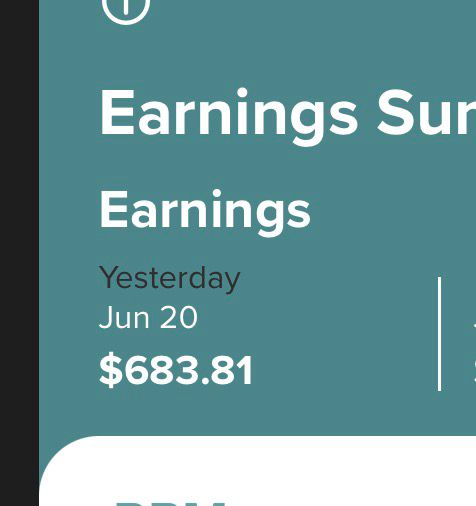
$683.81 earned on June 20 while the Facebook page continued feeding the site, Google Discover, and syndication in the background.
Two posts published this morning told the same story from opposite angles. The first was a specific earnings figure: $683.81 on a single day, generated while the operator was running errands and at the gym. The Facebook page kept feeding the site, Discover, and syndication channels without any active input. The second post made the structural point explicit: a job pays you for the hours you show up, a publisher asset pays you for the audience you have built.
The Google Discover side of that equation is where most publishers leave the largest amount of money on the table. The scale of the shift is hard to overstate. According to Press Gazette citing Chartbeat data from a network of almost 2,000 global news and media websites, 68% of all Google traffic now arrives through Discover rather than traditional search. Google now represents 25% of publisher traffic overall, with 17 percentage points of that coming from Discover and only 8 from search.
The structural shift behind that figure is even more dramatic when viewed over time. NewzDash CEO John Shehata's analysis of more than 400 news publishers worldwide shows that Discover's share of Google traffic nearly doubled in two years, climbing from 37% in 2023 to 67.51% by the fourth quarter of 2025, while traditional web search dropped from 51.10% to 27.42% over the same period.
Despite that dominance, Discover traffic remains volatile by nature. Publishers have reported traffic swings of 70 to 85 percent within 48 hours of core algorithm updates. That volatility makes it essential to understand exactly which variables are driving your site's Discover performance before you build revenue plans around it. A full read of Search Console data, site technical signals, and niche-specific Discover behavior is the starting point for any operator who wants to predict and sustain that revenue stream rather than react to it after the fact.
For operators who want structured support building a Facebook-to-Discover pipeline, our Facebook turnkey management program covers the full content and distribution architecture.
What the $683 day looks like as a system
Earnings like the June 20 figure do not come from a single viral post. They come from a stack of systems operating in parallel. The Facebook page generates qualified traffic to the owned site. That traffic triggers Discover indexing signals, which feeds more impressions. Syndication channels pick up the most-shared content and extend reach without additional production effort. Each layer amplifies the others.
Meta's full-year 2025 revenue reached $200.97 billion, a 22% year-over-year increase, reflecting the scale of the advertising inventory that flows through the Facebook feed and its downstream referral traffic. For individual page operators, the monetization opportunity is proportional to how well they have built the underlying content and engagement systems.
The caption-plus-first-comment structure, the first-60-minute comment reply discipline, the trained curation feed, and the Discover audit are not independent tactics. They are components of the same system. Each one improves the signal quality that the others depend on. A post with deeper comment engagement earns more distribution. More distribution means more site traffic. More site traffic improves Discover indexing. A better-indexed site generates more passive revenue on days when the operator is nowhere near a screen.
Frequently asked questions
What is the caption-plus-first-comment structure for Facebook page monetization? It is a two-layer post format where the caption carries the hook and emotional pull while the first comment holds the outbound link or follow-up question. Placing the link in the first comment preserves the post's native-content appearance, reduces algorithmic suppression from off-platform link detection, and has been shown to produce higher average earnings per post than standard link-in-caption formats.
Why does early comment engagement matter for Facebook page monetization? Facebook tests each post with a portion of your followers in the first hour. Strong engagement in that window, measured by comment depth, replies, and shares, signals the algorithm to extend distribution to non-followers. Weak early engagement typically means the post never reaches the recommendation feed, capping both reach and ad revenue potential.
How do I recover Facebook page recommendation status after it has been suspended? The recovery process is primarily algorithmic. Pages that maintain a consistent original-content publishing schedule, generate genuine comment engagement without using engagement bait, and avoid any further policy violations are seeing recommendation status restored without manual intervention. Meta's Professional Dashboard also provides an appeals path for pages that believe the suspension was applied in error.
What is Google Discover and why should Facebook page operators care about it? Google Discover is the algorithmic content feed served to mobile users through Google's native apps and Android. It now accounts for approximately 68% of all Google-driven traffic to news and media publishers, having nearly doubled its share in two years. For Facebook page operators who drive traffic to owned websites, Discover is frequently the largest single source of ad impressions and revenue, making it a critical second layer on top of Facebook referral traffic.
How do I train my Facebook feed to surface viral content for my niche? Begin by interacting consistently with the highest-performing content in your niche from pages that already have strong distribution. Facebook's ranking system reads that behavior and surfaces more similar content over time. Keeping your own page thematically focused reinforces the same signal, because the algorithm assigns higher recommendation weight to accounts with a clear, consistent content identity.
See more from Publisher in a Box in your Google results
The team behind 300M+ managed followers. We help publishers scale traffic, revenue, and audience across Facebook, Google Discover, and syndication networks.