Search across our learning center -- articles, newsletters, and more. Start typing or click a topic above.
Stay in the Loop
Get exclusive publishing strategies, industry insights, and early access to new features. No spam -- just signal.
Join 2,000+ publishers. Unsubscribe anytime.
Industry News
Facebook Content Monetization in 2026: Reels Reach, CMP Transparency, and the Asset Gap
Publisher In a Box11 min read
Table of Contents
This article is part of our daily digest series, in-depth summaries drawn from our X account, @publisherinabox, expanded with industry data.
Every video is now a Reel, and your follower count does not determine initial reach
The most consequential structural shift in Facebook publishing right now is one that many page owners still have not fully absorbed: as of mid-2025, every video uploaded to Facebook is automatically classified as a Reel. There is no longer a separate "video post" format. That reclassification is not cosmetic. It changes which distribution signals the algorithm reads and, critically, which audience it targets first.
The Reels algorithm is built around discovery, not subscription. When you publish a Reel, Facebook does not begin by showing it to your existing followers. It tests the content against a broad non-follower pool first. Watch time, completion rate, and shares signal whether the content deserves wider distribution. Followers who have opted in to your page are largely irrelevant to that first wave.
The data behind this shift is significant. Meta's official Creator Fast Track announcement (March 2026) confirmed that Facebook paid creators nearly $3 billion in 2025, a 35 percent increase from the prior year and the platform's highest annual total on record. That payout pool is driven by views, and views are driven overwhelmingly by non-follower discovery. Meanwhile, CNBC reported in January 2026, citing Sensor Tower data, that more than half of all ads on Instagram ran inside Reels in 2025, up from 35 percent in 2024, and that Reels had surpassed a $50 billion annual revenue run rate across Instagram and Facebook combined.
For publishers managing Facebook pages, the implication is direct: a page with 50,000 followers and strong completion rates on its Reels will outperform a page with 500,000 followers posting content that viewers abandon in the first three seconds. Follower count is a legacy vanity metric. Completion rate is the new currency.
Reels reach rose 13% year-over-year while standard post reach fell 41%, widening the format gap for Facebook page publishers.
The recommendation engine now fills more than half the Feed with content from pages you do not follow
The algorithmic shift away from follower-based distribution is not a minor tweak. It represents a structural redesign of how Facebook surfaces content. The feed that users see today is no longer primarily a reflection of who they have chosen to follow.
According to CNBC's reporting on Sensor Tower data, Reels accounted for 46 percent of time spent on the Instagram app in the US in 2025, up from 37 percent in 2024, and the trajectory on Facebook is similar. Meta's Q1 2026 earnings confirmed that Reels now account for 38.4 percent of all time spent on Facebook globally. AI-recommended content from accounts users do not follow now constitutes a majority of the average Facebook feed.
What this means operationally: if your content cannot hold a non-follower's attention through to the end, it will not circulate. The algorithm is reading completion signals continuously. A Reel watched to completion by strangers generates distribution. A Reel skipped by your own followers does not. This is the mechanism that makes follower count an unreliable proxy for earning potential under Facebook's current Content Monetization Program (CMP).
Pages that are still optimizing for follower growth above all else are, in effect, investing in the wrong asset. What earns money today is the ability to produce content that completes, gets shared, and triggers the distribution flywheel, not the size of an audience that has opted in.
If you work with a team to manage and grow a Facebook property, our Facebook consulting service covers exactly this kind of distribution-first content strategy, calibrated to your niche.
The CMP review window is no longer a black box
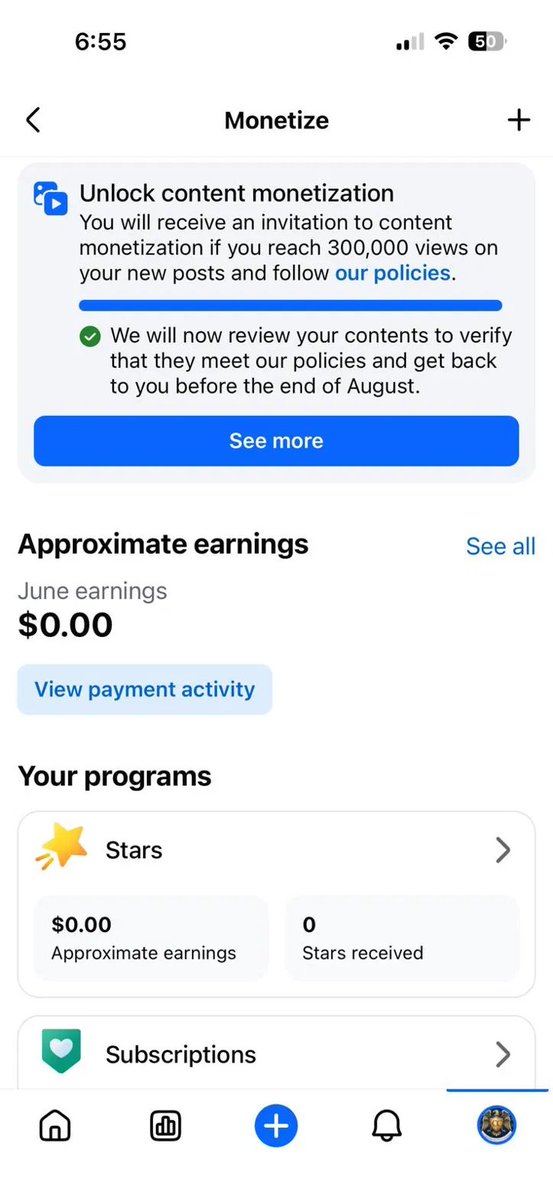
The updated CMP activation screen now displays an estimated review window, removing the uncertainty that previously made the qualification process opaque for creators.
One of the most practical updates for publishers working toward CMP eligibility is a change to the activation screen itself. Previously, once a page hit the 300,000-view threshold and submitted for review, there was no feedback on timing. Publishers sat in a queue with no visibility into where they stood or when a decision would arrive.
Facebook has now added an estimated review window to the CMP activation screen. Publishers can see roughly when the decision is expected. This is a meaningful quality-of-life improvement for anyone managing a page that is mid-qualification, because the uncertainty itself was a source of operational inefficiency. Pages would go into content-production limbo, unsure whether to accelerate output or hold steady while waiting.
The transparency improvement arrives alongside a broader set of CMP enhancements. Meta's official blog post introducing Creator Fast Track noted that the company is adding new earnings metrics so creators can better understand which posts are generating revenue and why. The combination of a clearer review timeline and more granular earnings data reduces the guesswork that has historically made Facebook page monetization feel unpredictable.
For publishers who are still building toward CMP eligibility and want a structured approach to the process, our guide to Facebook turnkey management walks through how to systematically build the view volume and policy compliance record that the program requires.
Turning income into an asset: the gap most Facebook earners ignore
The difference between a monetized Facebook page that earns and one that holds long-term value comes down to systems, documentation, and transferability, not posting streaks.
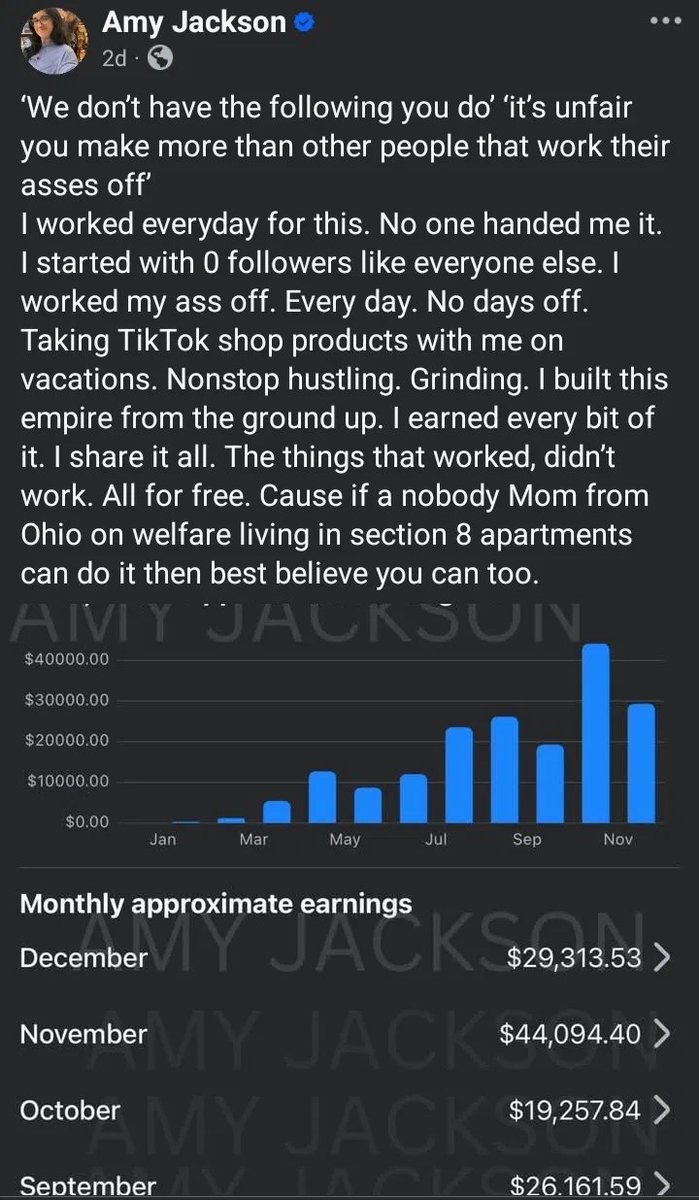
Viral earnings posts, the kind that announce six-figure Facebook payouts built from nothing, are a recurring fixture of creator social media. The story arc is familiar: a creator starts with zero followers, posts every single day without exception, builds a following, and generates substantial income. Those stories are often true. But they describe income, not an asset.
The difference is transferability. Income stops the day the posting stops. An asset continues to generate value whether or not the original operator is actively running it. A Facebook page that earns because one person's daily effort holds it together is not an asset in the business sense. It is a job with a variable pay rate.
Converting a monetized page into a transferable asset requires documented systems, a content production process that can be handed off, audience data that is organized and auditable, and monetization infrastructure that does not depend on any single person's creative output. Meta's own data shows that the number of Facebook creators earning more than $10,000 annually grew by over 30 percent year-over-year. A meaningful share of those earners are building income. Far fewer are building assets with defined, documentable value.
For publishers who want their page to be something that can be scaled, sold, or operated by a team, the strategic priority is systematization. That means automating repeatable content tasks, standardizing the niche and voice so the page is not personality-dependent, and tracking the metrics that a buyer or partner would scrutinize.
Content automation and the weight of production
Content creation remains the single largest operational burden for most Facebook publishers. Producing Reels at the cadence the algorithm rewards, research suggests four to six posts per week drives meaningfully higher follower growth, requires either substantial time or a production system that removes the manual steps.
The principle behind viable content automation on Facebook is niche-specific viral research followed by original recreation. Scraping what is already performing within a niche, identifying the format and structural elements that drove completion, and rebuilding that content in an original form for a given page is a repeatable process. It also addresses the originality requirement directly: Meta's algorithm gives original, platform-native Reels significantly more organic reach than reposted or watermarked content.
Meta's Content Monetization program pays creators for Reels, Stories, photos, and text posts, all formats in one place since the August 2025 consolidation. That means a page producing a mix of content types, rather than relying on video alone, can draw from multiple revenue streams within the same program. The content automation question is therefore not about Reels volume. It is about maintaining consistent, policy-compliant output across formats without the production overhead consuming all available time.
What the data says about Facebook page monetization in 2026
Taken together, today's signals from @publisherinabox point to a Facebook monetization environment that rewards specific, measurable behaviors and punishes legacy assumptions about how the platform works.
Follower counts are being replaced by completion rates as the primary distribution signal. The feed is majority non-follower content. CMP processes are becoming more transparent. And the gap between earning from a page and building a page that is worth something long-term remains wide, but is closeable for publishers who approach it with the right systems.
TechCrunch confirmed in March 2026 that Facebook paid creators nearly $3 billion in 2025, a 35 percent increase from the prior year. That is real money moving through the platform. The publishers capturing the largest share of it are those who understand that the distribution logic has fundamentally changed, and who have built their operations around that reality rather than the platform as it existed three years ago.
Frequently asked questions
Does my Facebook follower count still affect how many people see my Reels? Follower count does not determine initial distribution for Reels. Facebook tests new Reels against a non-follower audience first. Watch time and completion rate are the primary signals that determine whether the content receives broader distribution. A page with fewer followers but stronger completion rates will typically outperform a larger page with weak retention metrics.
How does the Facebook Content Monetization Program (CMP) pay creators? The CMP, launched in its unified form in August 2025, pays creators based on the performance of eligible content across Reels, Stories, photos, and text posts. Payouts are calculated from qualified views and engagement signals rather than a fixed per-view rate. Most creators in 2025 reported earning between $0.02 and $0.20 per 1,000 Reels plays, with significant variation based on audience geography and content engagement quality.
What is the difference between a monetized Facebook page and a sellable Facebook page asset? A monetized page that depends entirely on one person's daily posting is an income stream, not a transferable asset. An asset is a page with documented systems, a content process that can be operated by others, clean policy history, and audience data that a buyer or partner can evaluate. Converting income into an asset requires systematizing production and reducing personal dependency on the operation.
Why did Facebook add a review timeline to the CMP activation screen? The previous CMP qualification process gave creators no visibility into when a review decision would arrive after hitting the 300,000-view threshold. Facebook added an estimated review window to the activation screen to reduce that uncertainty, allowing publishers to plan their content strategy around a rough timeline rather than waiting indefinitely with no feedback.
How important is original content for Facebook Reels distribution and monetization? Originality is a hard requirement for strong distribution under the current algorithm. Reposted content and videos carrying watermarks from other platforms receive suppressed distribution. Facebook's algorithm identifies platform-native, original content and rewards it with broader reach. For CMP eligibility, original content is also a policy requirement. Recreating viral content structures in your own original format, rather than reposting, is the compliant and algorithmically preferred approach.
See more from Publisher in a Box in your Google results
The team behind 300M+ managed followers. We help publishers scale traffic, revenue, and audience across Facebook, Google Discover, and syndication networks.