Most publishers read a limited originality notice as a 90-day wait, so they keep their heads down and plan to return when the penalty ends. Meta's help page describes a second risk that makes that plan expensive. It says that if your appeal is denied or you take no action after 90 days, "we may not issue payment to you," and that sentence refers to money your Page had already earned.
So the flag runs on two tracks. One stops future earnings, while the other holds accrued but unpaid earnings, and a successful appeal is the only release Meta describes. That changes the right response from waiting to working through a specific order.
This guide covers what the flag means and the order we would follow from the day the notice appears. The rules come from Meta's own pages, read on November 3, 2026, and we mark where Meta's words stop and our reading begins.
What does a limited originality violation mean?
The notice says your Page or profile "shared content that was unoriginal, or repurposed content from other sources with limited added value." Meta names two behaviors behind it, which are duplicating content and minor editorialization.
Duplicating means posting something that already exists on Facebook or belongs to someone else, "with no meaningful role in creating it." Minor editorialization means posting clips or images you did not film or produce, with only small changes. Meta's list of small changes includes:
Adding borders, logos, watermarks or an intro and outro
Adding only an on-screen caption or title, background music or subtitles
Changing a video's speed
Describing what happens in a photo or video, whether in text, on screen or by voiceover
Reaction videos that only watch along, and basic compilations with no narrative of your own
Meta says this list is guidance and not complete, so clearing every item does not make a post safe. The positive test is that you create the content yourself or "make meaningful enhancements that generate a new viewing experience for other users."
What does the flag actually cost?
The cost has four parts. In most cases the violation "carries a 90-day demonetization penalty," and any further content that breaks the policy during that period may extend it.
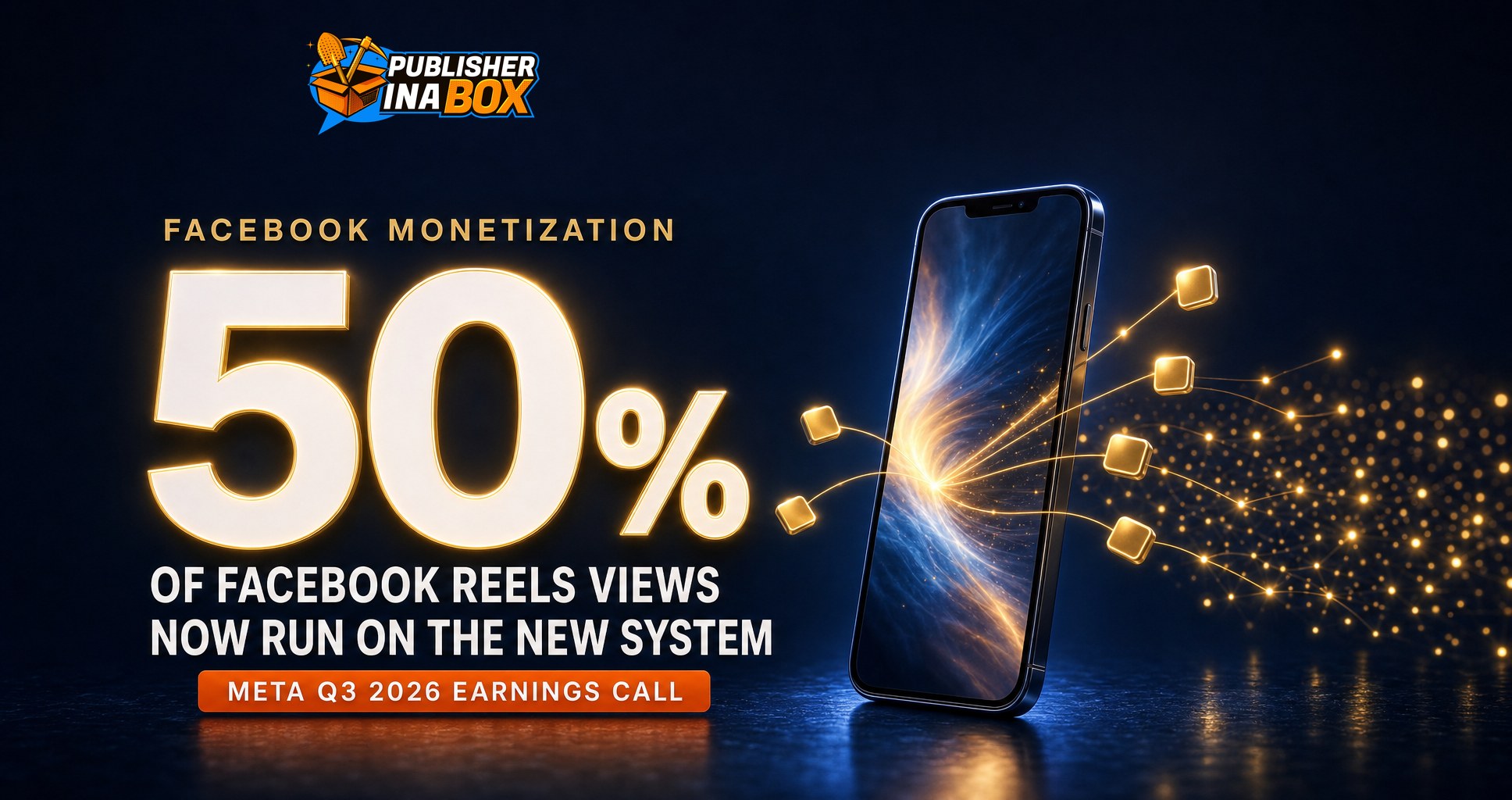
The second is reach, because unoriginal content "will not be recommended to audiences that do not follow your Page or profile." Meta told investors in October that its new retrieval system now covers roughly a quarter of unconnected Feed views and half of Reels views, as we explained in how Facebook now finds new posts, and unconnected views are the audience this penalty removes.
The third is access, because during the enforcement period you may be unable to earn through Meta's programs or join new ones. The fourth is the withheld money, and Meta's wording deserves to be read exactly: "Meta may withhold accrued but unpaid earnings. If your appeal is successful, withheld earnings may be released on the next scheduled payout date."
90 days
The usual demonetization penalty for limited originality, and also the point after which Meta says it may not pay withheld earnings if you took no action.
Source: Meta Business Help Center, read November 3, 2026
Take a made-up Page that earns $1,000 a month and has $1,000 accrued and unpaid when the notice arrives. Three months at zero is about $3,000 it will not earn, and the accrued $1,000 is a separate amount that depends on an appeal, which is why quietly waiting can cost more than the penalty itself.
The 90 days is the penalty you expect. The unpaid balance is the one that surprises people, because it depends on what you do during those 90 days.
Which flag do you actually have?
Several different Facebook problems get called "unoriginal," and sorting yours comes first because the appeal routes and deadlines do not match.
Meta Business Suite, Monetization, Policy issues, Request another review
Content Monetization Policies
One piece of content stops earning
Separate appeal form, up to 6 months, each piece individually
Ineligible format
Static videos, image slideshows, looping videos and text montages "cannot be monetized"
Change the format. This is a format rule, not an originality finding (our reading)
Ownership claim
A rights holder claims your content, and a portion or all of its payout can be held
Resolve the claim. Meta keeps originality rules separate from intellectual property policies
The 6-month window applies to individual content demonetizations, so we would not read it as extending the 90-day point for withheld earnings on a Page-level flag. If your notice names a different date, follow the notice.
Check your status under Meta Business Suite, then Monetization, then Policy Issues, which Meta says shows the restriction and the products it affects. Meta's help pages now also say the Professional dashboard has become a Creator Dashboard or Business Dashboard, so the mobile screens may not match older instructions. Our guide to removing Facebook Page violations covers strikes and Account Status. If you cannot tell which problem you have, the Meta Payout Troubleshooter is a read-only agent that runs in your own Claude Code, reviews your account and names the likely trigger, for $29.99.
What order should you fix it in?
Meta gives the pieces but not a schedule, so the sequence below is our reading of its rules.
1. Record the notice on the day you see it. Screenshot the Policy issues screen, including the affected products and any accrued balance. Meta does not say which date its 90 days runs from, so count from the notice date to stay on the safe side. 2. Clean the queue and keep publishing. Further violating content can extend the penalty, so pull anything that fails the test from scheduled posts and recycled queues, and check what anyone else is about to publish to the Page. Keep posting what is clearly yours, because going quiet does not clear the flag and your new posts are your evidence. Our guide to Facebook Page automation covers what should stay under human review. 3. Decide whether the flag is right. If you believe it is wrong, Meta says you can submit an appeal, and we would file right away. If it is right, Meta recommends posting "a significant number of reels that are original or meaningfully enhanced before requesting an appeal." 4. Publish the proof right away. Meta names reels here and does not define "significant." Set up clearly original posts and reels immediately, and keep a dated list of each one and what was original about it, since that list is the core of your appeal. If your Page leans on AI Reels, pause those and post content you filmed or built yourself, because we would not count on prompting a tool and reviewing the output as a meaningful enhancement. We produce reels at 30 to 60 seconds with real motion throughout. 5. Appeal within a day or so. On desktop, go to Monetization, then Policy issues, select the Page and click Request another review. On a phone, tap the violation notification, then Request review. Profiles in pro mode use the phone route, because Meta says Business Suite is not currently available to them. 6. Leave your old posts up until Meta answers. Meta's instruction is plain: "You should not bulk-delete the existing content on your Page or profile in an attempt to expedite your access to monetization." Deleting also has a cost, because Meta says "If you delete a post, you may not get credit for the engagement it received before deletion." Once you have a decision, remove anything you cannot defend a few at a time, starting with the most recent, and never hundreds in one day.
Do not treat the 90 days as time to use. It is the penalty, and the point after which Meta says it may not pay, while the window that matters to us is far shorter: set up the original content, then appeal within a day or so, rather than planning to come back to it later. Meta says appeals are "typically answered in seven days or less," and its reel page adds that they may take longer in some cases. Results vary widely: a Page we covered in our July digest saw recommendations and earnings restored three days after a July 22 restriction, which is one case and not a benchmark.
Treat the filing as a single chance. Meta's Page demonetization page says "An appeal can only be submitted once," although that sentence sits beside a reference to videos, and Meta does not spell out the limit for Page-level flags. Assuming you get one attempt costs nothing if we are wrong.
Does licensed, stock or AI content count as original?
A license does not settle this question on its own. Meta writes that the policy "can still apply to copyrighted or licensed content," so a license answers whether you may post something, while originality asks what you added to it.
Stock photos and AI tools do not appear in Meta's lists, and we would not read that as approval or as a ban. Our reading is that the same test applies to the finished post, which means what counts is what the post adds for the viewer. For photo memes Meta gives an unusually precise bar, which is text that "adds at least two new pieces of information or changes the interpretation of the original image." Describing the image does not qualify.
Third-party footage inside your own video can pass when your on-screen presence is the focus and you add new information, commentary or a better storyline. Meta's March update said narrating what is already on screen, stitching clips together or simply reacting is unoriginal. The same update reported that views and time spent on original Reels approximately doubled in the second half of 2025 compared with a year earlier, which is Meta's own figure.
Treat that as a narrow exception. Never repost or lightly edit another creator's finished asset, and never reuse a source image. Use licensed stock, or an AI image generated from a prompt that describes the source image.
What if you run several Pages?
Networks have two extra rules to check. Meta says content from affiliate entities distributed by third-party providers, such as multi-channel networks or social media agencies, "may be considered original content," as long as the network and its affiliates "are not monetizing the same piece of content."
The same policy lists manufactured sharing and "high volume crossposting" as behavior that can cost you monetization. Separately, content crossposted by a Page you do not own or manage may not earn, although crossposts from your own Instagram are excepted. Before a network shares an asset across Pages, we would write down which single Page monetizes it.
How do you keep one flag from hurting the whole business?
A Page-level penalty stops Facebook earnings, while your website, your email list, Google Discover, syndication partners and generative engine optimization (GEO), often referred to as AI search optimization, all keep working because they do not depend on that eligibility. Our guide to diversifying publisher revenue explains how to build those lines before you need them, and why some posts earn nothing separates a policy problem from a performance dip.
Where to go from here
If you need to know what is restricting your account before you spend your appeal, the Meta Payout Troubleshooter gives you a read-only agent that reviews your account and hands you next steps and the words to use with Facebook. It does not act on your account or guarantee an outcome. If you want your team trained to run monetized Pages with original content built into the process, Facebook Consulting teaches the method Publisher in a Box uses, and you keep 100 percent of the revenue.
Frequently asked questions
How long does a limited originality violation last?
Meta says that in most cases it carries a 90-day demonetization penalty. More content that breaks the policy during that period may extend it, and repeated violations may result in permanent removal of eligibility.
Will I lose money I already earned?
You might. Meta says it may withhold accrued but unpaid earnings, that a successful appeal may release them on the next scheduled payout date, and that if the appeal is denied or you take no action after 90 days, it may not issue payment.
Should I delete my old posts to clear the flag?
Meta says you should not bulk-delete existing content to speed up access to monetization. It also says a deleted post may lose credit for the engagement it received, so appeal first, wait for Meta's answer, and then remove what you cannot defend a few at a time, starting with the most recent.
How fast should I appeal a limited originality flag?
As fast as you can. If the flag is wrong, file right away. If it is right, Meta recommends posting original or meaningfully enhanced reels before requesting an appeal, so we would set up that original content and appeal within a day or so. The 90 days is the penalty, not a window to plan around.
Is a licensed video automatically original?
No. Meta says the policy can still apply to copyrighted or licensed content, so you still need to have created the content or added a meaningful enhancement. A license covers your right to post it.
How do I find out what triggered my flag?
Start in Meta Business Suite under Monetization, then Policy Issues. If the cause is still unclear, the Meta Payout Troubleshooter is a read-only diagnostic that reviews your account and names the likely trigger.
Sources
Meta Business Help Center, Understanding limited originality of content violations, read November 3, 2026, facebook.com
Meta Business Help Center, Original content guidelines on Facebook, read November 3, 2026, facebook.com
Meta Business Help Center, How to appeal loss of access to Facebook monetization features, read November 3, 2026, facebook.com
Meta Business Help Center, About Page and professional mode demonetization, read November 3, 2026, facebook.com
Meta Business Help Center, About Page, profile and reel demonetization, read November 3, 2026, facebook.com
Meta Business Help Center, Content Monetization Policies, read November 3, 2026, facebook.com
Meta Business Help Center, Partner Monetization Policies, read November 3, 2026, facebook.com
Meta Business Help Center, Content monetization policy tips, read November 3, 2026, facebook.com
Meta Business Help Center, About Facebook Content Monetization for creators, read November 3, 2026, facebook.com
Meta Business Help Center, About Creator and Business Dashboards on Facebook, read November 3, 2026, facebook.com
Meta Newsroom, Rewarding Original Creators on Facebook, March 2026, about.fb.com
See more from Publisher in a Box in your Google results
The team behind 300M+ managed followers. We help publishers scale traffic, revenue, and audience across Facebook, Google Discover, and syndication networks.